


The Illusion of Equity: Broadway’s Longevity Gap
“Diversity” a word that is echoed across nearly every major market today, from the beauty industry to corporate boardrooms and the entertainment field. It has been shouted from the rooftops so frequently that it has transitioned into a commercial buzzword. While this push for representation makes many feel included and seen, industry veterans question if this marketing leads to actual, long term equity.
To get a real sense of what is happening financially and systemically on Broadway, the data in this article is anchored by the latest Visibility Report from the Asian American Performers Action Coalition (AAPAC). Covering the 2021–2022 theater season, the study tracks employment demographics across major New York City stages, breaking down exactly who gets hired and who gets left out, from actors and directors to writers and lead producers. Looking at these industry-wide numbers provides a clear, data-driven picture of the ongoing gatekeeping that controls commercial success. To round out this analysis, the article also draws on contract and employment metrics from the Actors' Equity Association, the national labor union for stage actors and managers, alongside historical run lengths and box office statistics provided by Playbill. Together, these sources reveal the stark reality behind the curtain.
“I'm not trying to fight and sit at their table anymore, We're just building our own tables at this point” - Jasmin Richardson
The Eternal “Great White Way”
Chris Campbell, a Broadway performer previously seen in Hamilton and MJ: The Musical and now a Broadway resident director, warns that there is an inherent risk in treating representation as a trend.
The core issue remains: Has the introduction of "diversity" actually made these fields more viable in financial and career terms for Black creators? Data from the Asian American Performers Action Coalition suggests the answer is complicated.
According to the 2021-22 Visibility Report, White writers hold roughly 76% of all writing jobs on Broadway, meaning writers of color are shut out of over three-quarters of the storytelling market. Even when stories feature Black casts, the people actually writing the narratives and collecting the creative royalties are overwhelmingly white. This immediately establishes exactly who controls the foundational source material.
The disparities spill over to who directs these stories on Broadway. Both Campbell and theater director Jasmin Richardson make up a small portion of the industry’s directors. For writers from marginalized communities, who is at the helm is just as vital as who wrote the script. A Black director serves as a safeguard for the narrative's integrity, ensuring that authentic lived experiences are brought to the stage accurately rather than filtered through an outside lens.
Yet, the visibility report illustrates a stark divide in job security for these essential protectors of the story. Broadway did welcome a surge of Black directors following the pandemic shutdown, a boost directly linked to the Black Lives Matter movement and industry-wide pledges to hire more people of color. However, the data shows these artists remain heavily concentrated in nonprofit spaces and limited engagements with strict closing dates. Meanwhile, White directors continue to dominate commercial productions that run indefinitely. For creators of color, this creates a profound longevity gap. It represents the difference between a fleeting few weeks of guaranteed work and the lasting financial stability of a commercial smash.
Richardson, a director and seasoned performer currently in "The Book of Mormon," has seen these differences from a structural and foundational place. She suggests that shows with a predominantly Black leading cast often receive less financial support, resulting in a shortened creative development process. Additionally, with fewer creatives of color behind the table to help guide the room, it becomes harder to create an authentic story that avoids reductive narratives.
Richardson has been in shows featuring mostly people of color but run by white creative teams. She points out that source material featuring predominantly Black casts frequently fails to get the visibility or backing it deserves, no matter how brilliant the story is.
Having originated roles in shows that lasted only weeks, she notes that the "book" and the "score" are the invisible structures that dictate survival.
“The book is so important. The music is vital," Richardson said. "It’s never about the actors per se. It’s about the amount of work that producers, writers, composers, the creative team spends on the project too."
Richardson observed that in the rush to reach Broadway, the "integral part" of working through the story is often skipped in favor of the "moment.”
Getting to Broadway quickly is often the goal but it’s typically at the detriment of minority’s stories.
The journey to a grand production on one of the world's most prestigious and expensive stages begins with the source material. There is an abundance of fresh work from emerging voices and up and coming writers whose names you may not yet know, all fighting to have their art recognized and their stories heard. This uphill battle is inherently more difficult for people of color, especially considering that a staggering 76% of writers on Broadway are white. It is clear that diverse voices are not being actively sought, leaving only a few rare stories to slip through the cracks, provided any new works make it to the stage at all.


The Potential Glowing Outlier
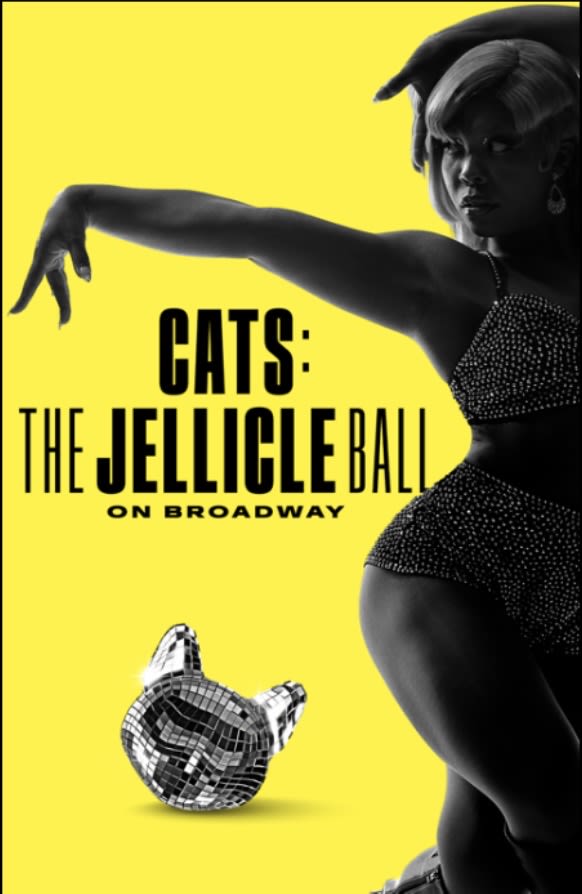
Cats: The Jellicle Ball is a unique example of this. This reimagined version centers Black ballroom culture while using an existing, highly successful script. While it is a risk to reimagine a legendary classic with faces of color at the forefront, it is a model I believe will continue because producers consider it "safe." With the show already having a massive leg up, it was simply repackaged to feature people of color and turn a profit. I fear that even when our stories are centered, the foundational power remains behind the scenes. At PAC NYC, the original development was led by Artistic Director Bill Rauch and Executive Director Khady Kamara Nunez. A Black woman originally from Senegal, Kamara Nunez brings over two decades of experience to the table, including her leadership on the Tony Award winning Take Me Out.
Mainstream media has a long history of profiting off Black art, which is glaringly obvious with the recent explosion of ballroom culture. As ballroom lingo like "clock it" and "tea" gets co-opted by the masses, it would be easy to assume this production is just another attempt by producers to cash in on a cultural trend. Still, the theater community is eager to see how it performs, especially in comparison to predominantly white led shows like Titanique.
Both productions share a remarkably similar upbringing, starting as successful Off-Broadway hits before making the leap to Broadway. As a parody of the 1997 blockbuster film, Titanique officially docked at the St. James Theatre on April 12, 2026. During its opening week (ending April 12), it grossed $625,697 with an attendance of 10,276, playing at a 95.36% capacity.
Even without the years of commercial branding that a film parody provides, Cats: The Jellicle Ball is already outpacing that trajectory. During its own opening week (ending April 12), the show surged to a massive $902,375, packing the house at 97% capacity. By the following week (ending April 19), it became a financial powerhouse, crossing the million-dollar mark with $1,010,072 in grosses. These numbers prove that audience demand for Black-led productions rooted in community authenticity stretches far beyond the typical theater framework.
But Cats: The Jellicle Ball is the glowing exception. This production operates differently because the creative team actually put real time, care, and financial backing into its development, particularly in its casting. Rather than just borrowing the aesthetic, the show is told authentically by featuring real members of the ballroom community, including legends like Junior LaBeija and Leiomy.
Yet, even as we celebrate these hard-won victories, a quiet thought always lingers. Given the theater industry's historical track record with Black-led productions, how long will this show actually last? The formula for authentic success exists, but in a Broadway landscape that rarely sustains these stories long-term, the clock is always ticking.

TikTok: Black Shows are on CP Time
In our community, the joke about 'CP time' usually refers to showing up late. But on Broadway, the clock works in reverse. For Black-led productions, 'CP time' is the countdown that begins the moment the curtain rises—a frantic race to prove financial viability before the industry decides our time is up. While white-led hits are given the grace to 'find their audience' over years, Black stories are often expected to perform miracles in weeks. the statistics tell a story of a persistent ceiling.
The numbers in the Visibility Report map out a clear divide. White-led commercial hits are routinely nurtured to a 52-week survival benchmark, while Black-led open runs frequently hit a financial wall and close around just 16 weeks. This structural squeeze persists across all limited engagements, where Black revivals (14 weeks), new stories (10 weeks), and transfers (8 weeks) are consistently granted a fraction of the stage time afforded to their White-led counterparts.
To understand exactly how this "time gap" operates, it helps to examine the core production models used on Broadway:
Commercial Hits (Open Runs): Investor-backed productions designed to run indefinitely as long as they remain profitable.
Revivals: Restagings of proven classics, usually booked for limited windows and driven by star casting or nostalgia.
New Stories: Original plays and musicals making their Broadway debut, given a designated runway to build word-of-mouth.
Non-Profit Transfers: Acclaimed shows moving from subsidized theaters, often boxed into strict, pre-scheduled subscription blocks.
Recent years have seen an uptick in successful multicultural ensembles, including Hamilton, The Book of Mormon, and MJ the Musical. Yet, these "smash hits" are outliers when compared to other Black led productions like A Wonderful World, Tina: The Tina Turner Musical, or A Strange Loop.
Despite winning Tony Awards, both A Strange Loop and Tina had relatively short runs. Even The Wiz, considered a classic, was initially contracted for a limited engagement. Campbell argues that the difference often comes down to the sustained investment in the "craft" of the production.
“Quality is the only thing that keeps these shows running," Campbell said. "The craft of storytelling is what keeps those around.”
However, Campbell notes that the industry often sabotages the very quality it claims to seek by involving too many conflicting creative voices. Richardson echoed this sentiment, noting that some shows are mounted simply because the finances exist, rather than because the story has been properly workshopped.
“It can’t just be we’re going to mount this show, we have this idea and we have the finances to do so," Richardson said. "Everything's just trying to get to Broadway, but without the integral part of working through book and score.”
Rushing and zooming through the process leads to short lived runs resulting in unsustained paychecks and a lack of benefits.



BROADWAY BENEFITS GAP
The consequences when the curtain falls too soon overwhelmingly affect performers of color. According to the visibility report. The math doesn’t lie. The data shows that 62 percent of Black members who worked on Broadway in 2023 did not meet the annual earnings threshold for full benefits.
In the theater industry, actors do not automatically receive health insurance. They must work a minimum number of weeks each year to qualify for the Equity-League Benefit Funds. The fact that 62% of Black actors on Broadway failed to meet this threshold suggests that while hiring rates may be up, these actors are largely being cast in short-term or temporary contracts that do not provide long-term financial or medical security.
When an actor books a long-term contract, specifically on Broadway, there is, of course, the initial excitement that all their hard work has paid off. But beyond a steady paycheck, they also start receiving union benefits. You receive these benefits on any Equity contract, including regional work outside of the city at what the theater community calls an "Equity house" (a theater where union members are contracted to work), as well as on national tours.
In this industry, performance weeks equal the currency that turns into benefits. Each week you work equals an Equity point, so the more you work on Broadway or regional contracts, the more points you receive. Those points are then traded in for health benefits—including medical, dental, vision, and prescription plans—alongside vital retirement security through the union's pension and 401(k) funds.
Beyond health and medical coverage, working on a union contract means you get the benefit of being protected by a specific set of rules that these theaters have to follow. The union guarantees strict workplace protections, such as mandatory minimum salaries, overtime pay, and supplemental workers' compensation if an actor is injured on the job. Equity also enforces rigid safety and sanitary conditions—regulating mandatory breaks, turnaround times between shifts, and even the physical safety of the stage itself—while providing union representation to protect against unfair dismissal.
However, there are some controversial views regarding the protection the union actually offers. Many actors feel that, even though they pay into the union, it offers very little actual protection and fails to enforce the rules it is supposed to uphold. It’s important to note that many of the rules currently in place were fought for by the actors themselves. But this raises a bigger question: how can actors change the way the union functions and distributes benefits if the underlying model itself is flawed? The healthcare system in the US is notoriously tragic and complicated as it is. For these actors, it feels like they are forced to navigate multiple broken systems that are simultaneously working against them.
Although these benefits and protections exist, the massive disparity gap in who is getting hired and what stories are being told creates a direct gap in who is actually being protected. In a capitalistic society, the system values and protects those who are currently working over those who are not. And not to mention, even if you are not currently working as an Equity member, you still have to pay your union dues. Ultimately, these industry disparities reinforce and mirror the disparities of the real world. Lower-income communities disproportionately consist of Black and brown people, and that reality is surely reflected in the entertainment space as well.
The Cheque Juuuuusssttt Clears
While the marquee lights often promise a new era of inclusion, the actual paper trail of employment tells a more lopsided story. According to the latest Actors’ Equity Association data, the industry’s push for diversity still leaves specific communities fighting for airtime. The data reveals that while 'BIPOC' representation as a whole has ticked upward, the individual slices of the pie remain small: Black or African American members received roughly 16% of contracts, while Asian and Hispanic/Latino members were left with even slimmer margins. By breaking down the 'BIPOC' monolith into these specific groups, we see that the stage isn't becoming a Technicolor dream quite yet—it’s still a space where the vast majority of opportunities are concentrated in a single demographic, leaving others to wait in the wings for a truly equitable share of the spotlight
More contracts does not equal more cash flow.The financial reality for these artists is also shifting, though gaps remain. The 2023 Actors' Equity Association employment bias report found that while total contracts for BIPOC members rose to 30.3 percent, up from 21.3 percent in the years preceding 2020, the average weekly salary for a BIPOC principal actor in a musical was 1,292 dollars, slightly higher than the overall average. This does not include deductions for taxes, agency fees, and union fees.
The lack of financial stability and the longing to build a life in a career that you love is relatable across multiple fields. Although the core difference is when all of your jobs are contractual, the sight of longevity, life, and financial stability is distant.
This goes beyond just the actors on stage. As highlighted in the graph below, while people of color are frequently cast on stage, they are largely shut out of behind-the-scenes jobs. According to the Visibility Report, this disparity extends directly to the stage crew, stagehands, and the members who run the production—the people who play an integral part in keeping these shows going. The data reveals that over 94% of the behind-the-scenes crew is white, leaving only 6% for people of color.
Richardson recalled that her university experience involved trying to fit in with white peers, but the professional world brought a different pressure: the demand to be "blacker" or "sassier" to book a room.
"It was such a confusing thing of who am I? Who do I have to be to be booked?" Richardson said. "Often you're just trying to book the room, so you try to fit a mold... and honestly, it just made me question myself more."
Not being seen by the people that use your bodies for profit while not clearly seeing you in your identity is struggle that’s too common and often repackaged as a normal experience apart of the industry. This creates a space for mental turmoil and stifled creativity.
*Experience this next section with sound

Press Play
…And The Troupes Goes On!
These stereotypes not only plague our community off the stage, but also on stage in the creative rooms and in audition rooms. These tropes have survived in a system that we believed has made major progress.
This systemic gatekeeping often begins at the casting level. Campbell recalls reviewing casting descriptions where the phrase "All American" was used as a code for "white." Even when diversity is achieved, Richardson suggests the industry sometimes uses Black creators as financial shields.
She noted that producers can sometimes recoup insurance or tax money by closing a show early, often blaming the closure on lack of revenue or the performers, rather than the lack of a strong fundamental foundation that creates a framework to success.
“Producers get their money back tax-wise if they close by a certain time," Richardson said. "They blame us for things versus sheltering and covering us... they’ll throw Black women as the cost for things failing.”
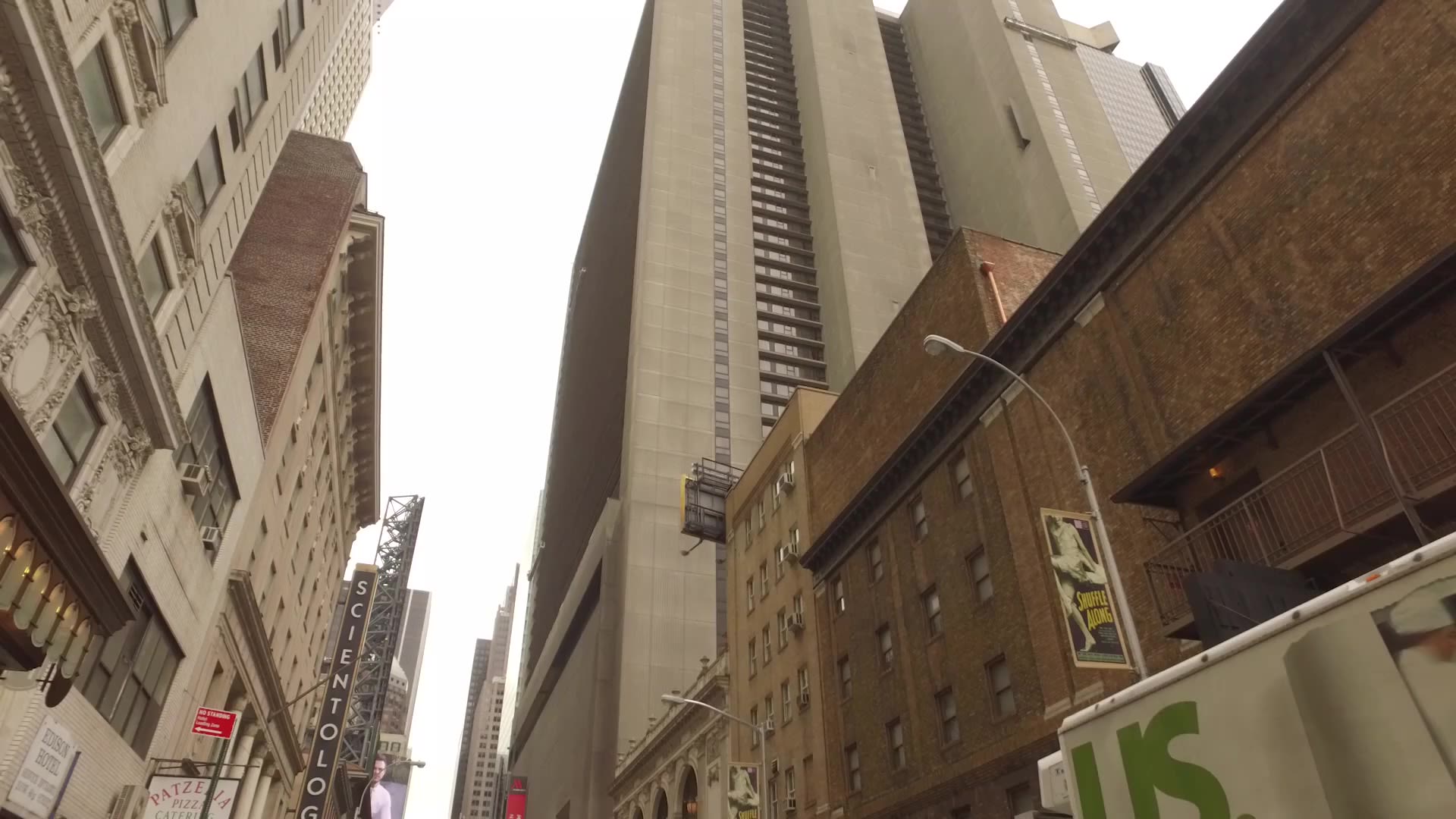
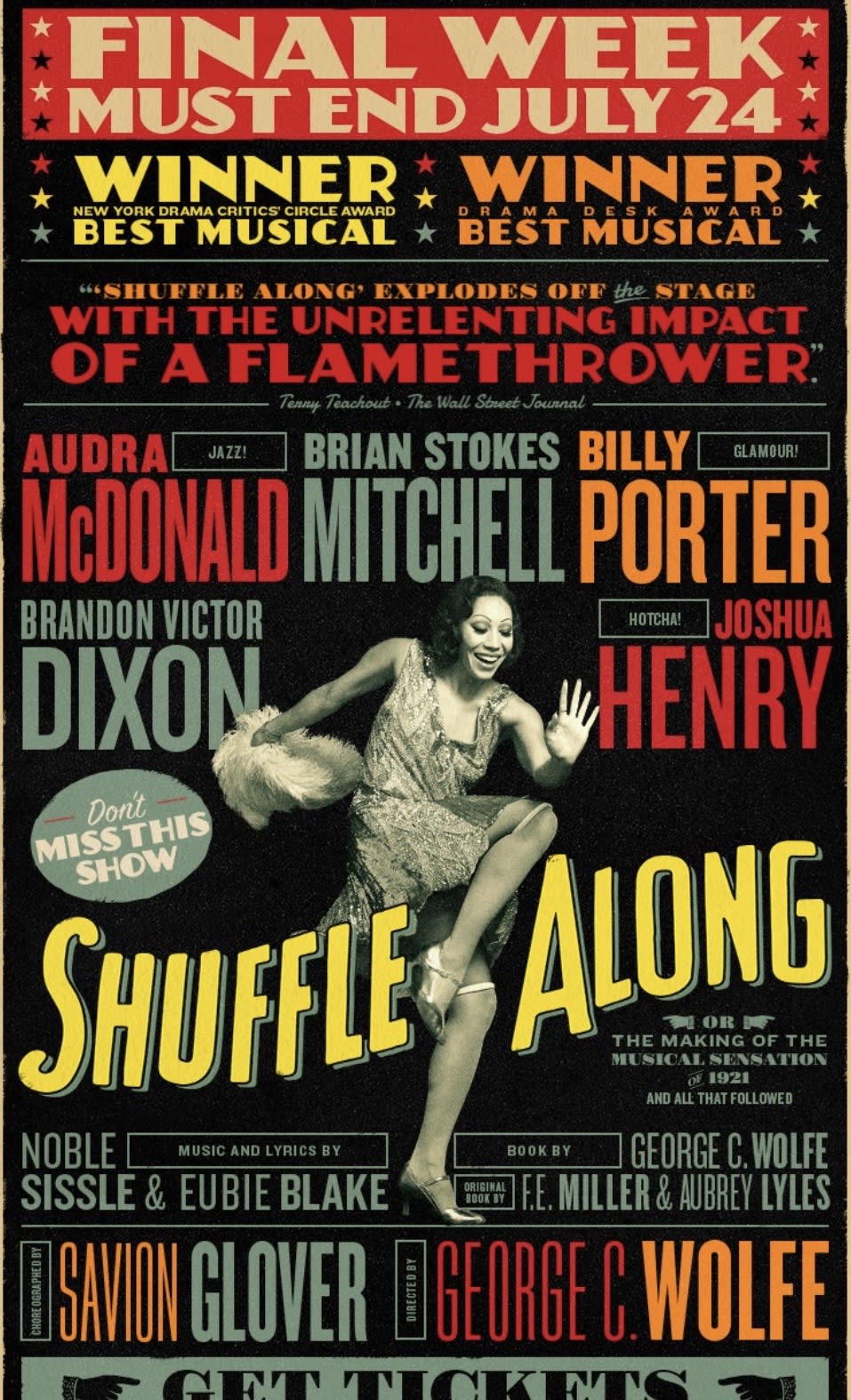
We saw this play out in the recent years as Shuffle Along starring the Broadway legend, Audra McDonald, announced an abrubt closing only after officially opening on April 28, 2016, and closed on July 24, 2016, after playing 100 performances.
Lead producer Scott Rudin released a statement at the time explaining that because McDonald was the show's biggest draw, her "prolonged and unexpected hiatus" meant the production would run at a financial loss that it simply could not "responsibly absorb." Instead of moving forward with a replacement as originally planned, the producers chose to shutter the show entirely on the day she departed.
When star Megan Hilty announced a hiatus on June 11, 2025, she would be taking a three-to-four-week hiatus to recover from vocal cord tendinitis, brought on by the show's grueling "neck choreography."
Instead of shuttering the production, the producers publicly supported Hilty’s recovery, keeping the show open with standby Dee Roscioli and a team of understudies. This support allowed the musical to maintain its momentum and remain open today, while Hilty was able to return and complete her run through January 2026.
The longevity of any production depends on the immense leverage held by Broadway producers, who act as the final gatekeepers of what stays and what goes. These power players hold the sole authority to "pull the plug" based on their own internal metrics of risk and reward, often hiding behind financial jargon to justify their decisions. When a show like Shuffle Along is shuttered, producers often cite a lack of "commercial viability" or the loss of a bankable star, yet these same standards are rarely applied with such finality to white-led productions. By controlling the narrative of why a show "works," producers can effectively decide which cultural stories are deemed worthy of a long-term investment and which are treated as disposable trends, regardless of the actual demand from the audience.
The AAPA Visibility Report highlights the overwhelming lack of diversity that over 87% of Broadway Lead Producers are White.
Perhaps most telling is the absolute absence of diversity beyond a single demographic shift: while Black producers accounted for the remaining 12.9% of leadership, representation for Asian, Latinx, Indigenous, and MENA (Middle Eastern and North African) lead producers sat at a staggering zero percent. This disparity begs the question: who dictates who gets to tell our stories, how they are told, and how long they are allowed to run?
Lately, there has been a visible surge of celebrity Black producers stepping into this space. Names like Jennifer Hudson, Kandi Burruss, and Broadway legend LaChanze—who runs a highly successful production company—are leading the charge. Even Cynthia Erivo and celebrity stylist Law Roach have joined the ranks as producers for Cats: The Jellicle Ball. While some might argue that many Black celebrities are hopping on the bandwagon to get a Tony Award under their belt, their involvement could be a key factor in revamping how Black stories are told and produced on.
The consensus among many theater professionals is that the gap is not yet closed. While more contracts are being offered, those contracts are often not sustainable. To bridge this gap, both Campbell and Richardson suggest that Black creators must move beyond the industry’s existing gatekeeping.
“They’ve got to come from us,” Campbell said.

…And On
The push continues. Data approves that moving numbers don’t necessarily Translate to visibility, Longevity, And equity. It’s clear that there is material out there, and there are stories for us and by us but are constantly overlooked overwhelmingly majority White producers. It’s no secret that the global majority cannot move forward without the support of White leadership. In this current system that thrives off of oppression and a caste system that continues to only benefit a few, The challenge remains how do we penetrate system not meant for us.
True equity requires that the story being marketed to the public matches the reality of the data. The truth is white stories are always at the forefront. Stories led and written by Black people are often looked at as insurance policies and a quick turnover to make fast cash. While jobs are quickly being created and even more quickly taken away, the fallback is typically always on the actor and crew. If a season is catered to a white audience and there is a lack of Black stories being told, the actor simply will not work because there are no stories for them to be a part of.
A reframe is in order. The data proves the system isn't broken; it is functioning exactly as intended, allowing only a few marginalized success stories through the gate. The challenge now is figuring out how to build and thrive in an industry built to keep the glass ceiling firmly in place.

Methodology
Data Collection and Sources
The data presented in this report was aggregated from multiple industry sources, primarily the Asian American Performers Action Coalition 2021-22 Visibility Report and the Actors' Equity Association 2023 Employment Bias Report. These organizations collect data annually to track hiring trends, ethnic representation and wage gaps to hold institutions accountable for equitable practices. To contextualize the financial stakes of these productions, historical run lengths, box office statistics and records of early commercial closures in 2016 were sourced from Playbill and BroadwayWorld. Supplemental qualitative data was gathered through original, recorded interviews with industry veterans, including resident director Chris Campbell and performer-director Jasmin Richardson, providing a behind-the-scenes lens on leadership and career sustainability.
A Note on AI Usage:: To help process the large reports referenced in this story, artificial intelligence was used as a research tool. AI assisted in sifting through the extensive data, double-checking that the statistics were interpreted accurately, and writing the formatting code used to build the Datawrapper graphs.


Appropriateness and Limitations
These datasets are the industry standard for measuring Broadway's "Power Gap" because they contrast high-level casting volume with actual creative control and take-home pay. However, a notable limitation is the time lag inherent in census-style reporting; the data reflects past seasons and may not capture the immediate impact of very recent closures or new 2026 productions. Additionally, while the statistics provide a broad overview, they cannot fully quantify the "creative exhaustion" or systemic gatekeeping described by the interviewees, which is why the oral histories are vital to this story. But thee data can provide us a further look into how to approach solutions moving forward.
Reflection
Reporting on the "Longevity Gap" revealed that visibility and equity are not synonymous. While I was surprised to find that BIPOC actors have nearly reached parity in casting, the data regarding Black writers and production length proved that the "ceiling" remains firm. The most significant challenge was the technical execution of the visualizations. Crafting graphs that accurately supported the narrative without oversimplifying the data was an uphill battle. I chose to redo every visualization from previous assignments to ensure they were not only more appealing but actually logical in their scale.
On a personal level, it was a profound challenge to maintain a journalistic tone. As a Black woman and creative in this industry, I know the frustration of fighting for both a platform and fair compensation. Navigating that internal anger while ensuring the data spoke for itself required constant recalibration. If I were to publish this for a wider audience, I would improve the technical delivery by moving beyond static uploads into fully integrated, custom-coded interactive modules. This would ensure the "human story" behind the numbers remains accessible and unbreakable across all digital platforms.
 Built with Shorthand